Introduction
In the realm of precision machining, CNC rotary tables play a pivotal role in enhancing productivity and accuracy. These versatile devices find applications across a variety of machine tools, enabling manufacturers to achieve complex machining tasks with ease. This blog post will delve into the different types of machine tools that are well-suited for CNC rotary tables, exploring their specific uses and benefits.
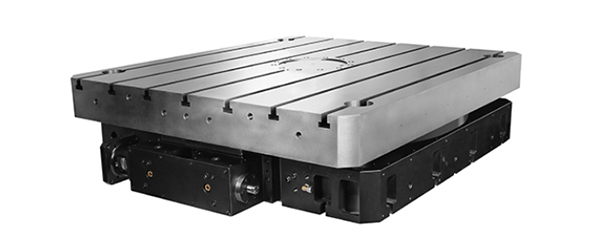
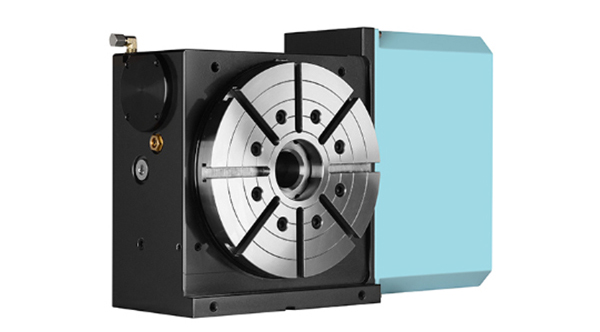
Machining Centers
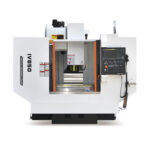
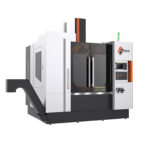
Machining centers are among the most common machine tools that utilize CNC rotary tables. These advanced machines are equipped with multiple axes of motion and a tool changer, allowing for the efficient machining of complex parts. The addition of a CNC rotary table to a machining center provides several advantages.
Increased Machining Flexibility
With a CNC rotary table, machining centers can perform multi-sided machining operations. This means that parts can be machined on multiple surfaces without the need for repositioning or additional setups. For example, a part with a cylindrical shape can be machined on its outer diameter, end faces, and even internal features such as holes and grooves, all in a single setup. This not only saves time but also improves machining accuracy by reducing the cumulative errors associated with multiple setups.
Enhanced Precision
CNC rotary tables are designed to provide high-precision rotational motion. They are capable of positioning the workpiece with extreme accuracy, ensuring that each machining operation is performed precisely. This is particularly important when machining parts with tight tolerances or complex geometries. By using a CNC rotary table, manufacturers can achieve better surface finishes, dimensional accuracy, and geometric tolerances, resulting in higher-quality parts.
Applications in Machining Centers
In machining centers, CNC rotary tables are commonly used for a variety of applications, including milling, drilling, boring, and tapping. They can be used to machine parts such as automotive components, aerospace parts, medical devices, and industrial machinery. For instance, in the production of engine blocks, CNC rotary tables can be used to machine the cylinder bores, crankshaft journals, and other critical features with high precision.
CNC Milling Machines
CNC milling machines are another type of machine tool that benefits from the use of CNC rotary tables. These machines use rotating cutting tools to remove material from a workpiece, creating various shapes and features. The addition of a CNC rotary table to a milling machine expands its capabilities and allows for more complex machining operations.
Angular Milling Operations
CNC rotary tables enable CNC milling machines to perform angular milling operations. This involves machining features at an angle relative to the workpiece’s axis. For example, a helical groove can be machined on a shaft using a CNC rotary table to control the angular position of the workpiece while the milling cutter moves along the length of the shaft. This type of operation is not possible without a rotary table and can be used to create components such as screws, helical gears, and spiral shafts.
Contouring and Profiling
Rotary tables also facilitate contouring and profiling operations on CNC milling machines. By rotating the workpiece, the milling cutter can follow a complex contour or profile, creating smooth and precise surfaces. This is useful for machining parts with irregular shapes, such as molds, dies, and artistic components. For example, a CNC milling machine equipped with a rotary table can be used to machine the outer contour of a plastic injection mold, ensuring that the mold has the correct shape and dimensions for efficient plastic part production.
Applications in CNC Milling Machines
CNC rotary tables are widely used in CNC milling machines for a range of applications, including machining of gears, cams, impellers, and turbine blades. They are also used in the production of custom parts, prototypes, and small batch production runs. For instance, in the aerospace industry, CNC rotary tables are used to machine turbine blades with complex geometries, ensuring optimal performance and efficiency.
CNC Lathes
CNC lathes are primarily used for turning operations, where a workpiece is rotated against a cutting tool to remove material and create cylindrical shapes. While CNC lathes are not typically associated with rotational axes other than the spindle, CNC rotary tables can be added to enhance their capabilities.
Secondary Operations
In some cases, CNC rotary tables can be used on CNC lathes for secondary operations. For example, after the initial turning operation, the workpiece can be transferred to a CNC rotary table mounted on the lathe for additional machining operations such as milling, drilling, or boring. This allows for the creation of more complex parts in a single setup, reducing the need for multiple machine tools and setup times.
Machining of Non-Cylindrical Features
CNC rotary tables can also be used on CNC lathes to machine non-cylindrical features. By rotating the workpiece, the cutting tool can be positioned to machine features such as flats, grooves, or keyways that are perpendicular or at an angle to the axis of rotation. This expands the capabilities of CNC lathes and enables the production of parts with more diverse geometries.
Applications in CNC Lathes
In CNC lathes, CNC rotary tables are commonly used for applications such as machining of couplings, flanges, and other parts that require additional machining operations beyond turning. They are also used in the production of parts for the automotive, aerospace, and general manufacturing industries. For example, in the production of automotive engine components, CNC rotary tables can be used to machine the timing gears and other features that require precise positioning and machining.
Grinding Machines
Grinding machines are used for precision finishing operations, where a grinding wheel is used to remove a small amount of material from a workpiece to achieve a high level of surface finish and dimensional accuracy. CNC rotary tables can be incorporated into grinding machines to enhance their capabilities and improve the efficiency of grinding operations.
Rotary Grinding Operations
CNC rotary tables enable grinding machines to perform rotary grinding operations. This involves rotating the workpiece while the grinding wheel moves in a controlled manner to remove material and create a precise surface finish. For example, in the grinding of cylindrical parts, the workpiece can be rotated on a CNC rotary table while the grinding wheel is fed axially or radially to achieve the desired surface finish and dimensional accuracy.
Grinding of Complex Shapes
Rotary tables also facilitate the grinding of complex shapes on grinding machines. By rotating the workpiece, the grinding wheel can be positioned to grind features such as curves, contours, and angles that are difficult to access with traditional grinding methods. This allows for the production of parts with high-precision surface finishes and complex geometries, such as turbine blades, cutting tools, and molds.
Applications in Grinding Machines
CNC rotary tables are widely used in grinding machines for a variety of applications, including cylindrical grinding, surface grinding, and tool and cutter grinding. They are also used in the production of precision components for industries such as aerospace, automotive, and medical. For instance, in the aerospace industry, CNC rotary tables are used to grind turbine blades with high-precision surface finishes and complex geometries, ensuring optimal performance and efficiency.
Conclusion
CNC rotary tables are versatile accessories that can significantly enhance the capabilities of a wide range of machine tools. Whether it’s a machining center, CNC milling machine, CNC lathe, or grinding machine, the addition of a CNC rotary table allows for more complex machining operations, increased precision, and improved productivity. By understanding the compatibility of CNC rotary tables with different machine tools and their specific applications, manufacturers can make informed decisions when choosing the right equipment for their machining needs. So, if you’re looking to take your machining operations to the next level, consider incorporating a CNC rotary table into your machine tool setup.