Improvement of processing flexibility
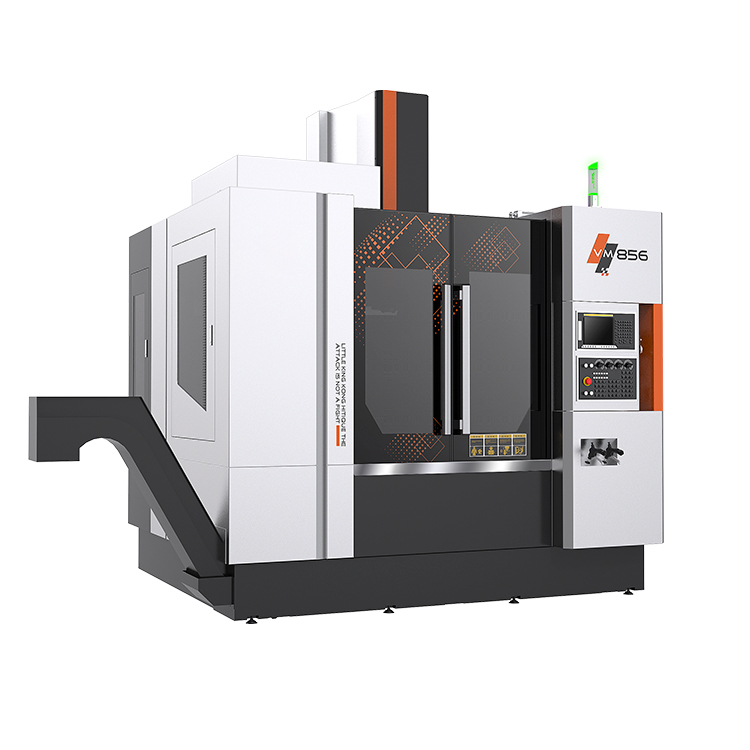
Achieving complex geometric shape processing: The 4th axis rotary table adds additional rotational motion to the vertical machining center (VMC), making it easier to process complex parts with rotational symmetry. For example, in the aerospace field, turbine blades with complex geometries can be manufactured. By adding a rotating shaft, manufacturers can complete the processing of multiple surfaces and angles in a single clamping, avoiding the errors and time waste brought by multiple clamping, and greatly enhancing the flexibility of processing.
Multi-faceted processing capability: It enables multi-faceted processing of workpieces, allowing for the processing of surfaces in different directions without repositioning the workpiece. For instance, in the processing of automotive engine components, multiple surfaces with different directions can be processed simultaneously, reducing setup time and enhancing overall production efficiency.
Improve processing accuracy
Reduce clamping errors: By reducing the multiple clamping processes, the errors caused by inaccurate clamping are also reduced. Completing multiple processing procedures in one clamping can better ensure the positional accuracy between each processing surface and improve the overall processing accuracy of the parts. Take the manufacturing of high-precision molds as an example. A 4-axis rotary table can more accurately process complex molds and mold inserts that meet strict tolerance requirements.
Precise rotational positioning: The 4th axis rotary table can achieve precise rotational positioning, enabling the tool to accurately reach the required processing position and Angle, ensuring the accuracy and consistency of the processing.
Improve production efficiency
Shorten the production cycle: By completing multiple processing procedures in a single clamping, the time for handling and clamping workpieces between different procedures is reduced, thereby significantly shortening the production cycle. In the automotive manufacturing industry, for instance, this improvement in efficiency can help manufacturers save costs and shorten delivery times.
Increase the degree of automation: In combination with automated equipment and programming control, the 4-axis rotary table can achieve a continuous and efficient processing procedure, reduce manual intervention, and improve production efficiency and the stability of product quality.
The application industries are extensive.
Aerospace field: It is used to manufacture components with complex shapes and high precision requirements, such as turbine blades, rocket engine parts, etc., and can meet the strict requirements of this industry for the quality and performance of components.
The automotive industry: It plays a significant role in the processing of key components such as engines and transmissions, enhancing the production efficiency and quality of automotive parts.
Tool and mold industry: It can be used to process complex molds and tools, such as plastic injection molds, die-casting molds, etc., providing the necessary precision and flexibility for this industry to produce high-quality molds