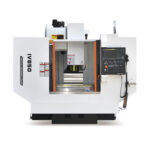
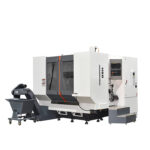
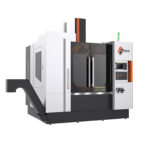
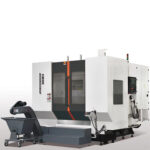
In the world of machining, column – moving machining centers have emerged as a significant player, offering unique capabilities. Let’s delve into their structural features and how they impact practical applications.
Column Moving Machining Center Structure and Movement
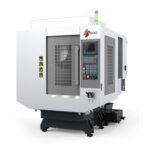
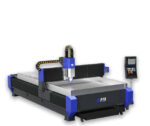
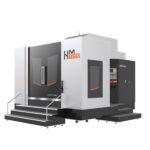
The column in a column – moving machining center is a key component. It is designed to be sturdy and rigid. Typically, the column houses the spindle and the drive mechanisms for the tool. The movement of the column is a distinctive feature. It can move along the X – axis, which allows for a wide range of machining operations across the workpiece.
For example, in the production of large – scale industrial molds, the column’s movement enables the machining tool to cover the extensive surface area of the mold. This is crucial as molds often have complex geometries and large dimensions. The ability of the column to move precisely along the X – axis ensures that every part of the mold can be accurately machined, from the deep cavities to the outer edges.
Spindle and Tooling Arrangement
The spindle in a column – moving machining center is mounted on the column. It is responsible for holding and rotating the cutting tool. The spindle is usually equipped with high – power motors to handle various machining tasks. The tooling arrangement is designed for quick and efficient tool changes.
In the aerospace industry, where precision is of utmost importance, the spindle’s performance in a column – moving machining center is vital. When machining components such as turbine blades, the spindle needs to rotate the cutting tool at high speeds with great accuracy. The quick – tool – change feature allows for different machining operations, like milling, drilling, and grinding, to be carried out on the same part without significant downtime.
Workpiece Table and Support
The workpiece table is another important part of the structure. It is designed to hold the workpiece firmly in place during machining. The table often has a flat and rigid surface, sometimes with clamping mechanisms to secure different – shaped workpieces.
In the automotive manufacturing sector, when machining engine blocks or transmission housings, the workpiece table must be able to withstand the forces generated during machining. The rigidity of the table and its support system ensures that the workpiece does not move or vibrate during the process. This is essential for achieving the required tolerances and surface finishes.
Guideways and Precision Movement
Column – moving machining centers are equipped with high – precision guideways. These guideways ensure the smooth movement of the column along the X – axis and also contribute to the overall accuracy of the machining center.
In the production of high – end furniture, where intricate designs and smooth surfaces are desired, the precision movement of the column provided by these guideways is crucial. The machining center can accurately carve out detailed patterns on wooden workpieces, creating beautiful and high – quality furniture pieces.
In conclusion, the structural features of column – moving machining centers, including the column’s movement, spindle and tooling, workpiece table, and guideways, make them highly suitable for a variety of applications in industries such as aerospace, automotive, and furniture manufacturing. These features ensure precision, efficiency, and the ability to handle complex machining tasks.