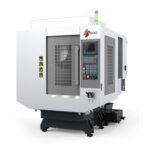
CNC machining centers are vital for precision manufacturing, but they can encounter issues that disrupt production. This blog explores common failures, their causes, and practical solutions to keep your operations running smoothly.
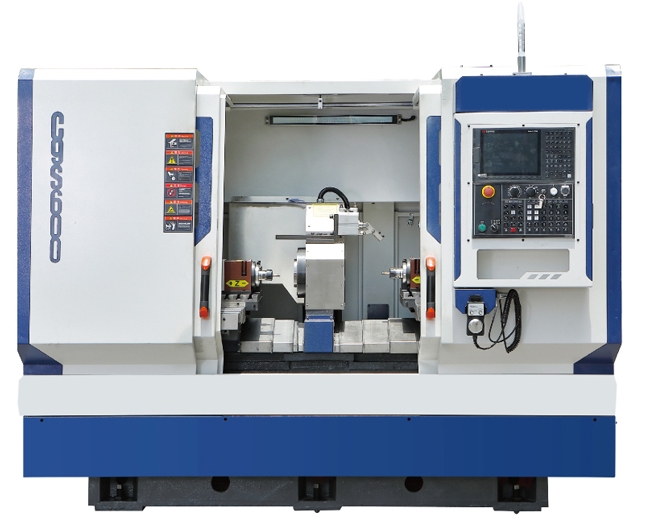
Common Faults and Solutions
Mechanical Faults
Guide Rail Wear: In long – term use, the guide rails of the machining center will experience wear. For example, in a high – frequency production workshop where parts are continuously machined, the guide rails are subject to constant friction. This wear can lead to inaccurate positioning of the worktable, resulting in poor machining accuracy of the parts.
Spindle Malfunction: The spindle is the core component of the machining center. Issues such as abnormal noise, overheating, or sudden stops may occur. In a heavy – cutting application scenario, if the spindle is overloaded for a long time, it may cause damage to the bearings inside the spindle.
For Guide Rail Wear: Regularly check the guide rail wear. When the wear is minor, you can adjust the pre – load of the guide rail to compensate for the wear. If the wear is severe, the guide rail needs to be replaced. Lubricate the guide rails frequently to reduce friction and extend their service life.
For Spindle Malfunction: Check the lubrication system of the spindle first. Ensure that the lubricating oil is clean and at the appropriate level. If the bearing is damaged, replace the bearing immediately. In addition, avoid overloading the spindle during operation to prevent similar faults from occurring.
Electrical Faults
Control System Failure: The control system of the machining center is responsible for coordinating the operation of various components. Software glitches or hardware failures can cause the control system to malfunction. For instance, in a factory environment with poor power quality, voltage fluctuations may damage the control board of the control system, resulting in abnormal commands or even system crashes.
Sensor Fault: Sensors are used to detect the position, speed, and other parameters of the machining center. A faulty sensor can lead to incorrect feedback information. In an automated machining process, if the position sensor fails, the machine may not be able to accurately position the workpiece, affecting the machining quality.
For Control System Failure: Regularly update the control system software to fix potential bugs. Install a voltage stabilizer to protect the control system from voltage fluctuations. If the control board is damaged, replace it with a new one.
For Sensor Fault: Check the sensor connections regularly to ensure they are firm. Clean the sensor surface to prevent dust and debris from affecting its performance. If the sensor is indeed faulty, replace it with a new one.
Hydraulic and Pneumatic Faults
Hydraulic Leakage: In a machining center with a hydraulic system, hydraulic leakage is a common problem. High – pressure hydraulic oil may leak from seals or pipes. In a continuous – operation machining environment, the aging of seals due to long – term use can cause hydraulic oil to leak, reducing the pressure of the hydraulic system and affecting the normal operation of hydraulic – driven components.
Pneumatic Pressure Instability: Pneumatic systems are used for clamping workpieces and other operations. Unstable air pressure can lead to unreliable clamping. For example, in a workshop with multiple pneumatic devices in use, air pressure fluctuations may occur due to improper air distribution, resulting in the workpiece not being firmly clamped during machining.
For Hydraulic Leakage: Regularly inspect the hydraulic system for leaks. Replace damaged seals and pipes in time. Keep the hydraulic oil clean and at the appropriate level to ensure the normal operation of the hydraulic system.
For Pneumatic Pressure Instability: Install a pressure regulator to stabilize the air pressure. Check the air pipes for blockages and leaks. Ensure that the air compressor can provide sufficient and stable air supply.
Conclusion
By understanding the common faults of machining centers and their corresponding countermeasures, operators can quickly identify and solve problems, reducing downtime and improving production efficiency. Regular maintenance and inspection are also crucial to prevent these faults from occurring. Remember, a well – maintained machining center is the key to high – quality and efficient production.